21 stories
·
0 followers

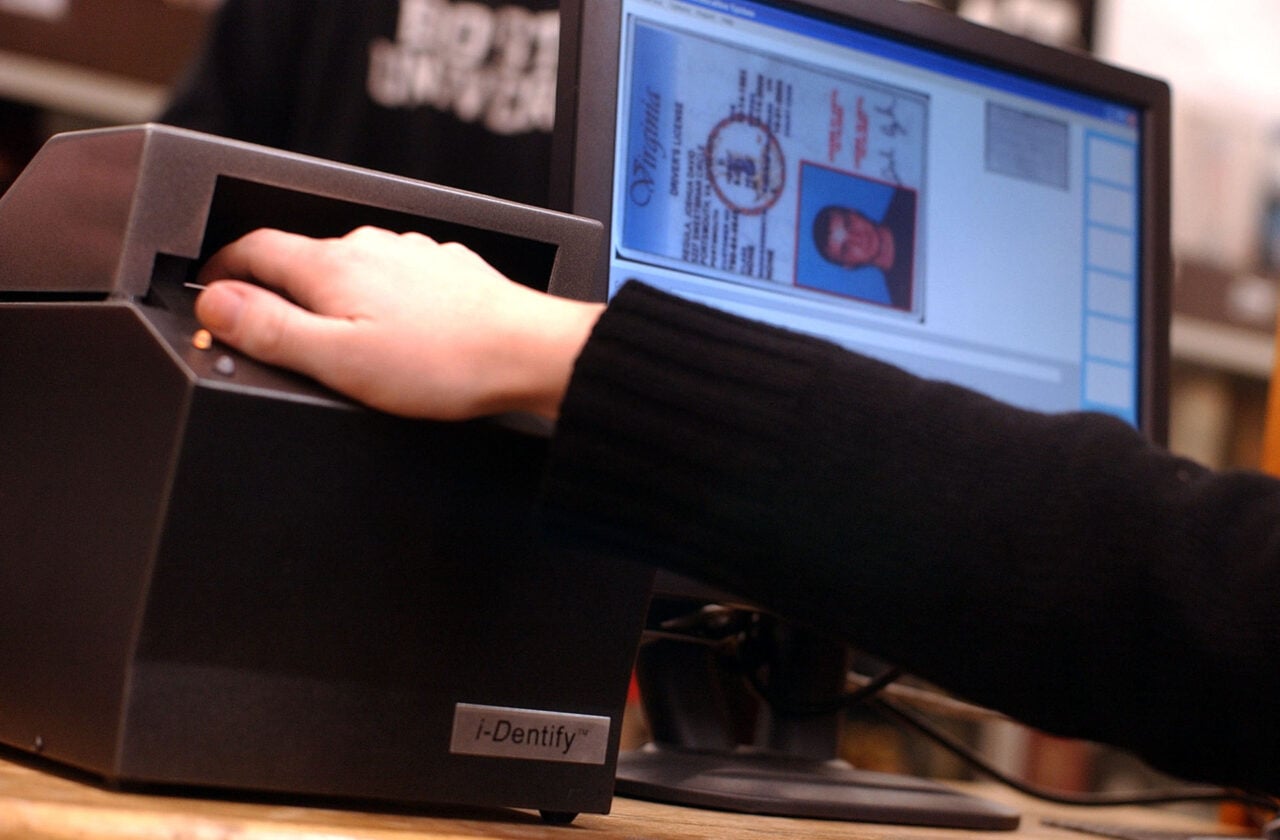
Identity Verification Is Broken. The 153 Million Driver’s Licenses Now for Sale Are Proof

2 Shares
A massive trove of driver’s license scans allegedly stolen from an identity verification company shows the danger of creating honey pots of our most sensitive documents for malicious actors to exploit.

Read the whole story
smitheng
13 hours ago
reply
Share this story
Delete

To Save Higher Ed, Professors Need to Get a Little Weird

1 Share
Teachers need to model the passion they want to see.
Read the whole story
smitheng
17 days ago
reply
Share this story
Delete

There are no lossless transformations of natural-language text

1 Share

There are no lossless transformations of natural-language text

Sophie Alpert shares her "internal policy on acceptable use of AI writing by engineers". It's a short read (supporting its own recommendations) and really good.

If you chose to have LLMs help massage your writing the following rule seems crucial to me:

You must stand behind every idea and every sentence in your docs. It is your responsibility to make sure that the entire document is representative of your own thoughts before you share it. If a reviewer asks, “What did you mean by this line?”, it’s not acceptable to reply with “Oh sorry, AI wrote that, just ignore it.” You will confuse your readers (and waste their time) if you present them things that are not genuinely representative of your thoughts.

The "no lossless transformations" idea from the post title is expanded on here:

There are no lossless transformations of natural-language text — every rewrite and rephrase changes the meaning of your writing, and if this is done by an entity that doesn’t have the most detailed mental representation of what you personally were trying to communicate, information will be lost.

Tags: writing, ai, generative-ai, llms, ai-misuse

Read the whole story
smitheng
22 days ago
reply
Share this story
Delete

Public Education Is Democracy’s Strongest Investment

1 Share

Public Education Is Democracy’s Strongest Investment

By: Dr. Kenita T. Williams, Vice President and Chief Operating Officer, Southern Education Foundation

Editor’s Note: This article is the first in a series exploring key findings from the Southern Education Foundation’s Economic Vitality and Education in the South, Part II: Projections for a Post-Pandemic South (EVES II) report. Throughout this series, we’ll examine the many interconnected factors shaping the South’s future and what they mean for students across the learning continuum, communities, and our region.


Across the South, public education has always represented something larger than a school building. It represents possibility. It is where young people discover who they are, where communities come together, and where we make one of our most important collective commitments that every child deserves the opportunity to learn, contribute, and thrive.

Today, that commitment is more important than ever.

The Southern Education Foundation’s latest report, Economic Vitality and Education in the South, Part II: Projections for a Post-Pandemic South (EVES II), makes one thing clear: the future of our region depends on the educational opportunities we provide today. As the South continues to grow and educate more than two out of every five public school students in the United States, the choices we make now will shape not only our workforce, but our democracy.

Democracy depends on more than elections. It depends on opportunity. It depends on ensuring that every student has access to a high-quality education that prepares them to participate fully in their communities, pursue meaningful careers, and contribute to our shared future.

EVES II highlights a growing challenge. In the coming years, our nation will need more healthcare professionals, engineers, technology experts, educators, and skilled workers than ever before. Yet too many students continue to face barriers that limit their access to the educational pathways leading to those careers.

These barriers are not simply educational, they are economic and societal. A student’s opportunity to succeed is influenced by factors such as access to early learning, stable housing, healthcare, school resources, and community support. The report’s Social Determinants of Education framework reminds us that when we strengthen these conditions, we strengthen educational outcomes and, ultimately, our workforce and economy.

Perhaps the report’s most important message is one that deserves greater attention: expanding educational opportunity benefits everyone.

Too often, conversations about educational opportunity are framed as if helping some students means taking something away from others. The evidence tells a different story. When more students have access to a quality education, we expand the pool of future nurses, teachers, entrepreneurs, scientists, and civic leaders. Greater opportunity creates stronger communities, a more competitive economy, and a healthier democracy.

Public education remains one of the few institutions designed to serve every child while protecting students’ rights, well-being, and opportunity. That mission deserves our continued investment and support not only because it benefits individual students but also because it benefits all of us.

The future of the South will be shaped by the investments we make today. If we want thriving communities, a prepared workforce, and a strong democracy, we must continue to strengthen education and ensure every student has the opportunity to succeed.

Public education is more than a public good. It is one of democracy’s greatest investments in our shared future.


The post Public Education Is Democracy’s Strongest Investment appeared first on Southern Education Foundation.

Read the whole story
smitheng
22 days ago
reply
Share this story
Delete

Grokipedia, Elon Musk’s anti-woke AI Wikipedia, seems to have stopped updating in April

1 Share

Elon Musk launched Grokipedia last October as an anti-woke, AI-powered Wikipedia. It is, Renée DiResta wrote for The Atlantic at the time, part of “an escalating campaign to discredit Wikipedia and reshape what counts as a reliable source of basic information in the age of AI.”

Grokipedia allows humans to suggest edits, but Columbia’s Tow Center for Digital Journalism found in February that the tool was increasingly editing itself. “Grok-supplied edits spiked in December and have overtaken human submitters, making up more than three-quarters of the suggestions,” Tow Center fellow C.J. Robinson wrote.

Now, though, it appears that Grokipedia isn’t being edited at all. “The encyclopedia stopped editing itself and processing suggested edits from humans,” DiResta and the Stanford Cyber Policy Center Ronald Robertson wrote for Lawfare this week. “As far as we can tell, no entry has changed in more than three months.”

That matters, they say, because people actually use Grokipedia, and AI systems, especially ChatGPT, rely on its content:

The significance here extends beyond one internet encyclopedia. Grokipedia is not just a small xAI side project. The web traffic analytics firm Similarweb estimates that Grokipedia received 6.7 million visits in June 2026 and ranked 11,022nd among websites globally — substantial reach for a site launched less than a year earlier. Individual high-profile entries command significant readership: Grokipedia’s page-statistics API — which serves per-article view counts that are not displayed on the front-end website — records over 83 million views for President Obama and 16 million lifetime views for its Musk entry since October 2025.

Grokipedia’s contents also do not remain confined to Grokipedia. An Ahrefs analysis published in March 2026 found the site surfacing in roughly 356,000 citations across AI systems — most often in ChatGPT and Google’s AI Mode, and at lower volumes in Gemini, Copilot, and AI Overviews. That remains a small fraction of Wikipedia’s roughly 25 million such citations, but it is not trivial.

A reference work whose contents are silently frozen and whose editorial record is inaccurate could propagate incorrect or outdated information into answers that people encounter elsewhere. There are also potential reputational consequences for individuals with unreliable Grokipedia biographies who can no longer appeal to the AI for an edit…

As agentic AI systems begin to generate and maintain reference knowledge independently, the question is not only whether their output is accurate at a given moment. It’s whether their behavior over time is observable, and their record stable enough to be accountable for their contributions to the public information ecosystem. At the moment, Grokipedia is neither.

Boing Boing notes that Wikipedia is updated about a quarter of a million times per day.

Read the whole story
smitheng
24 days ago
reply
Share this story
Delete

SC data centers received $828M in tax breaks on electricity and computer purchases last year

1 Share

Seven South Carolina data center companies received $828 million in sales tax breaks on their technology and energy purchases last year. An attempt to block the incentives failed in the state Senate on Thursday, April 23, 2026. The above is a rendering of the $800 million data center under construction in Aiken County by Facebook parent company Meta. (Illustration courtesy of Meta)

COLUMBIA — Six years ago, there was no data center in South Carolina taking advantage of sales tax exemptions the state offers on the vast number of computers, servers, hardware and software purchased for these windowless facilities that power everything from artificial intelligence to high-speed financial trades.

Nor did any data center receive a reprieve from taxes on their monthly energy bills. It’s a benefit that could add up quickly, given the largest of these centers, known as “hyperscalers,” can consume upwards of 200 megawatts.

By last year, it was a very different story.

For seven companies, those sales tax breaks provided by state law tallied an estimated $828 million for the fiscal year that ended last June, according to data from the state’s fiscal analysts.

The whopping number was revealed during this week’s Senate budget debate, as Sen. Chip Campsen unsuccessfully sought a one-year suspension. He argued that giant corporations are getting benefits not provided to South Carolina residents, who senators referred to as “Fred and Ethel” — names for a couple borrowed from the 1950s TV show “I Love Lucy.”

“They don’t get any exemption, yet we’re giving it to the wealthiest (companies) in the history of the world,” the Isle of Palms Republican said.

“Fred and Ethel could use that money a lot better,” Campsen added.

Data center tax breaks are on the chopping block in some states

Data center controversy spreads

South Carolinians have long been exempted from paying sales taxes on their home electricity. Legislators extended that exemption to “technology intensive” facilities in 2006.

Six years later, they passed a law specifically exempting qualifying data centers from sales taxes on all electricity, as well as computers, related equipment and software used by the facility.

But no company claimed those breaks until the 2021-22 fiscal year, when they totaled less than $8 million. In four years, that escalated to $828 million, according to the state Revenue and Fiscal Affairs Office. It didn’t break down how much is attributable to the electricity exemption versus computer purchases.

To qualify for the breaks, a data center owner must invest at least $50 million over a five-year period and employ at least 25 full-time workers.

The company also must pay wages worth 150% of the per capita income in the county where it is located.

In Berkeley County, home to tech giant Google’s inaugural data center in the state, that amounts to an annual salary of $87,600.

In Aiken County, where Meta is building, it’s more than $85,000.

And in Colleton County, where a proposed gigawatt data center has since stalled, it’s about $74,000.

Unable to get agreement on a one-year hiatus of the sales tax breaks, Campsen managed to get a reporting requirement inserted in the state budget. Under the approved clause, the Department of Revenue must report the total worth of the tax breaks to the Legislature’s chief budget writers in the House and Senate.

South Carolina is among 14 states not disclosing revenue lost to data center tax breaks, according to a report released earlier this month by Good Jobs First, a watchdog group that focuses on economic development incentives.

“This is an industry that has descended upon the entire country,” Campsen said. “We are playing catchup. We are behind the eight ball. And this isn’t just South Carolina. Every state is struggling with this.”

Data center development has become mired in controversy in town halls across the country, even as President Donald Trump deemed them “key” to beating out adversaries, such as China, in the artificial intelligence race.

As public sentiment has turned against these energy-gobbling centers heading into the midterm elections, the president has pushed companies to sign a voluntary pledge to cover the cost of building out the power they require.

According to the research firm Data Center Watch, local opposition held up or blocked at least $156 billion worth of investment across 48 projects in the second half of 2025.

In South Carolina, residents of Spartanburg and Colleton counties have battled back two such data center proposals.

SC legislators denounce Lowcountry data center while mulling regulations for the industry

‘Pulling the rug out’

Still, Sen. Sean Bennett balked at the prospect of yanking sales tax incentives for one, specific industry, adding that it wasn’t fair to companies with centers under construction in the state or considering a location here.

“We’re pulling the rug out from underneath them,” the Summerville Republican argued.

“There is no reason to subsidize a multitrillion-dollar company with sales tax exemptions,” Campsen responded.

“In the 11th hour, we’re changing the rules,” Bennett shot back.

“It’s the only hour I have left,” Campsen volleyed, as legislation aimed at regulating these centers has stalled in Senate committees with just nine days left on the legislative calendar.

Sen. Michael Johnson also chimed in that ending the tax breaks could impact not just the developers of data centers but other industry that has its own private computing facilities.

“Lockheed Martin is going to be affected by this. Comcast, Charter, Blue Cross Blue Shield. All of these companies are saying, ‘We will be directly impacted by this,’” the Tega Cay Republican said.

“These are major employers in our state,” Johnson added. “We’re changing the business rules on existing companies. Businesses just want predictability.”

Beyond the impact to the companies, Sen. JD Chaplin pointed to the property tax revenue these centers bring to South Carolina’s rural corners.

Meta invests in SC solar as utilities expect more clean energy-conscious firms to finance projects

“It’s the people from the wealthier parts of the state that seem to be against data centers, while it’s the much poorer regions of the state that stand to benefit the most from them,” the Darlington Republican said.

“If we had $828 million to spend, we’d be spending a lot of that in the rural areas,” Campsen responded. “You’d get a lot more bang for your buck than giving a sales tax exemption to a data center.”

Other issues

Sen. Josh Kimbrell, R-Boiling Springs, pointed to the recently defeated Spartanburg County data center proposal, saying it would have generated between $60 million and $70 million in annual property taxes, even after the county offered the company a discount on its rates.

Now activists have turned their attention against a different $2.8 billion data center in the Upstate county — this one already approved for an incentive package that allows it to buy down its tax bill to a maximum of $2 million annually for each year of the 40-year deal.

Unlike other data centers in the state, this company, Valara, pledged to generate its own electricity. But to do so, it now wants to add 11 natural gas turbines, capable of generating about 400 megawatts total, to its previously permitted fleet of 24 natural gas-powered generators — a ninefold increase in power capacity.

State environmental regulators still need to review the company’s application before deciding whether to grant its latest request.

‘Cutting-edge’ supercomputing facility, a $2.8B investment, planned for Spartanburg County

Sen. Shane Martin, R-Pauline, unsuccessfully attempted to add a rule to the state budget to prevent what he called a “bait-and-switch” tactic.

While the Valara and sales tax repeal efforts failed, the Senate did add requirements to the budget that data centers using more than 3 million gallons of water a month report usage to the state’s environmental regulators or face a $10,000 per day penalty.

The Senate also barred data centers from other state level economic development incentives, though the state Commerce Department has largely steered clear of data center recruitment.

YOU MAKE OUR WORK POSSIBLE.

Read the whole story
smitheng
132 days ago
reply
Share this story
Delete
Next Page of Stories